

Effects of Overfeeding Fish: How Too Much Food Harms Aquatic Health
Understanding the effects of overfeeding fish is essential for anyone keeping fish in ponds or aquariums. Many fish owners believe frequent or heavy feeding improves growth and health, but the opposite is often true. Overfeeding disrupts water quality, stresses fish, and increases the risk of disease. Recognizing these effects helps you maintain a clean, balanced aquatic environment and healthier fish.
 Water Quality Problems Caused by Overfeeding
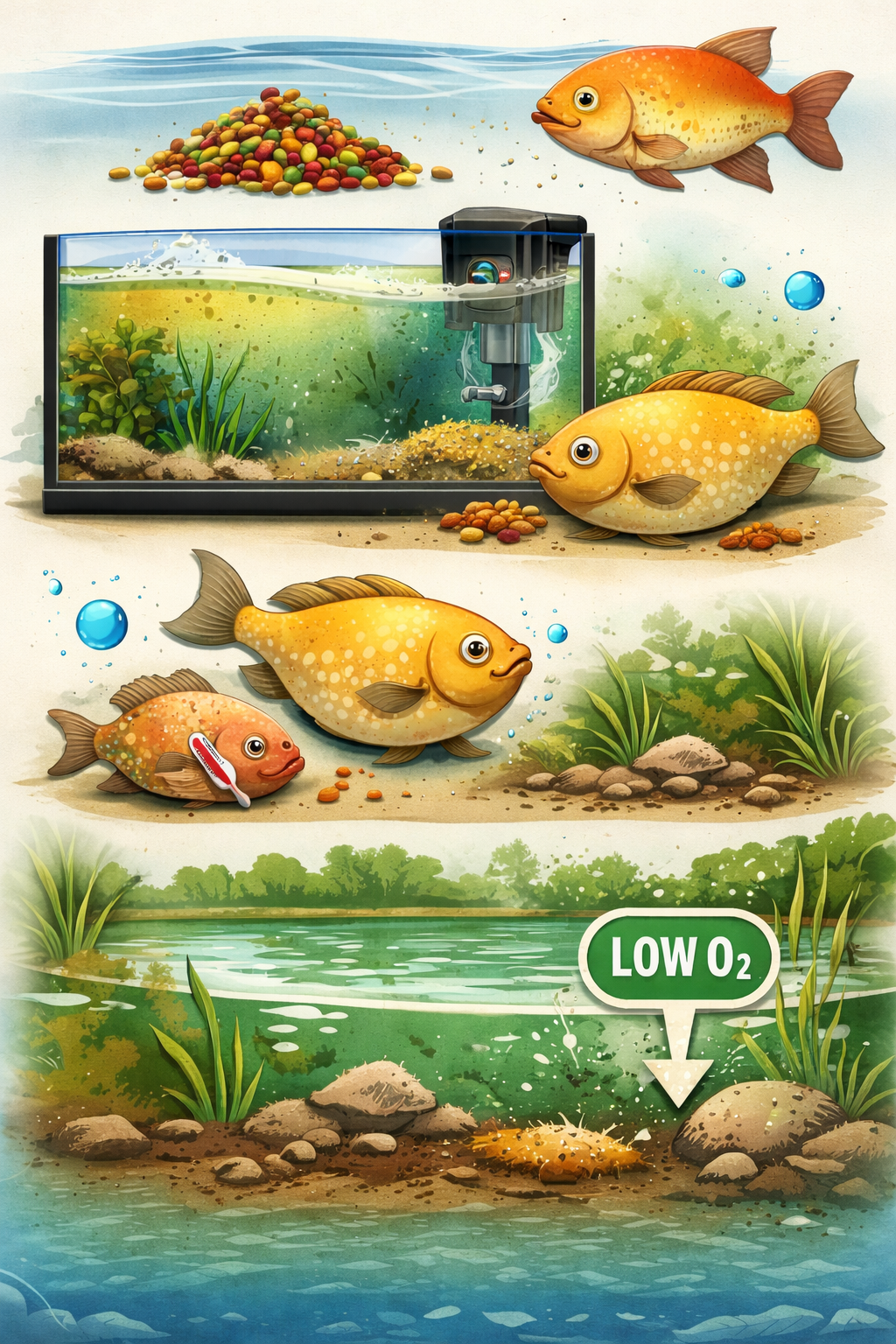
One of the most serious effects of overfeeding fish is declining water quality. Uneaten food quickly sinks and decomposes, releasing ammonia and other toxic compounds. Elevated ammonia levels damage fish gills, reduce oxygen intake, and can lead to sudden fish losses. Excess nutrients from decaying food also fuel algae growth, turning clear water cloudy and green.
Overfeeding places strain on filtration systems by producing more waste than they can process. As filters struggle to cope, beneficial bacteria populations decline, further worsening water conditions. Poor water quality creates a stressful environment where fish become more vulnerable to parasites and infections.
Health Effects of Overfeeding Fish
Overfeeding directly impacts fish health. Fish that eat too much often develop digestive problems, bloating, and fatty deposits around vital organs. These conditions reduce mobility and shorten lifespan. Stressed fish may show reduced appetite, erratic swimming, or increased susceptibility to bacterial and fungal diseases.
In colder water, the effects of overfeeding fish become even more severe. Fish metabolism slows, causing food to remain undigested for longer periods. This leads to internal stress and higher waste production, which further pollutes the water.
How Overfeeding Affects the Entire Ecosystem
The effects of overfeeding fish extend beyond individual fish to the entire aquatic ecosystem. Excess nutrients upset the natural balance, encouraging harmful algae blooms and oxygen depletion. Low oxygen levels stress fish, beneficial bacteria, and aquatic plants alike.
How to Prevent Overfeeding Fish
Preventing overfeeding starts with controlled feeding practices. Feed only what fish can consume within a few minutes and remove uneaten food promptly. Adjust feeding amounts based on water temperature and fish activity. Use high-quality food designed for your fish species and maintain regular water testing.
By understanding and avoiding the effects of overfeeding fish, you protect water quality, reduce stress, and support long-term fish health.